Neighborhood Safety: How Neighbors Can Keep Each Other Safe
- 7. 1. 2026 12:35
- SHARE


When we think about home safety, most of us picture what’s happening inside the house – lights off, doors locked, security system activated, everything in its place… But in real life, neighborhood safety often begins outside, with the people and activity around us every day.
A street where neighbors recognize each other, notice small changes, and keep an eye on what’s going on tends to feel safer – and usually is. That sense of safety doesn’t come from one big action. It grows from simple habits, shared awareness, and neighbors quietly looking out for one another.
The good part is that improving neighborhood safety doesn’t require big changes or awkward conversations. Simple awareness can make a real difference!
Why Neighborhood Safety Matters in Everyday Life
Neighborhood safety isn’t only about preventing crime. It’s also about creating a comfortable place where people feel good walking outside, letting kids play, and leaving home without worry.
When streets feel active and cared for, problems are less likely to happen in the first place.
Familiarity builds awareness… and awareness builds safety. It’s that simple!
💡 Did you know?
Some studies on community crime prevention have shown that neighborhoods with strong social connections experience up to 25% fewer burglaries compared to similar areas where neighbors rarely connect.
It Starts With Knowing Who Belongs
You don’t have to be close friends with everyone on your street. But knowing faces – and being known – makes a real difference.
A quick wave, a short conversation, or recognizing familiar cars helps you notice when something doesn’t quite fit. And when neighbors feel comfortable acknowledging each other, they’re also more likely to speak up if something seems off.
Familiarity builds awareness... and awareness builds safety. It’s that simple!
▶️ Watch how neigborhood awareness helps prevent problems:
Look Out for the Street, Not Just Your Own Door…
It’s natural to focus on your own home, but neighborhood safety works best when people look out for the whole street.
That could be as simple as spotting a package left outside for hours, a gate that didn’t get closed, or a car that seems out of place. In many cases, a quick heads-up to a neighbor is all it takes to sort things out.
These moments of attention can save neighbors money, time, and unnecessary stress.
💡 Did you know?
In several U.S. cities, improved outdoor lighting has been linked to reductions in nighttime crime ranging from 20% to 30%, according to urban safety studies. That’s a big impact for such a basic change.
Keep Communication Casual and Easy
Neighborhood safety doesn’t need meetings or rules. In fact, things tend to work better when communication feels natural and relaxed.
A quick heads-up before someone leaves town. A group text. Or just a friendly message when something looks unusual…
Research shows that communities with informal communication channels report faster response to any suspicious activity, simply because people feel more comfortable reaching out.

Lighting: Simple, Effective, and Often Overlooked
Here’s one of the most powerful neighborhood safety tools: light.
Good lighting around sidewalks, driveways, and entrances removes shadows and improves visibility. It also makes people feel safer when coming home after dark.
Sometimes, improving neighborhood safety is as simple as replacing a burned-out bulb or encouraging neighbors to keep porch lights on in the evening.
💡 Did you know?
In several U.S. cities, improved outdoor lighting has been linked to reductions in nighttime crime ranging from 20% to 30%, according to urban safety studies. That’s a big impact for such a basic change.
Shared Spaces Deserve Extra Care
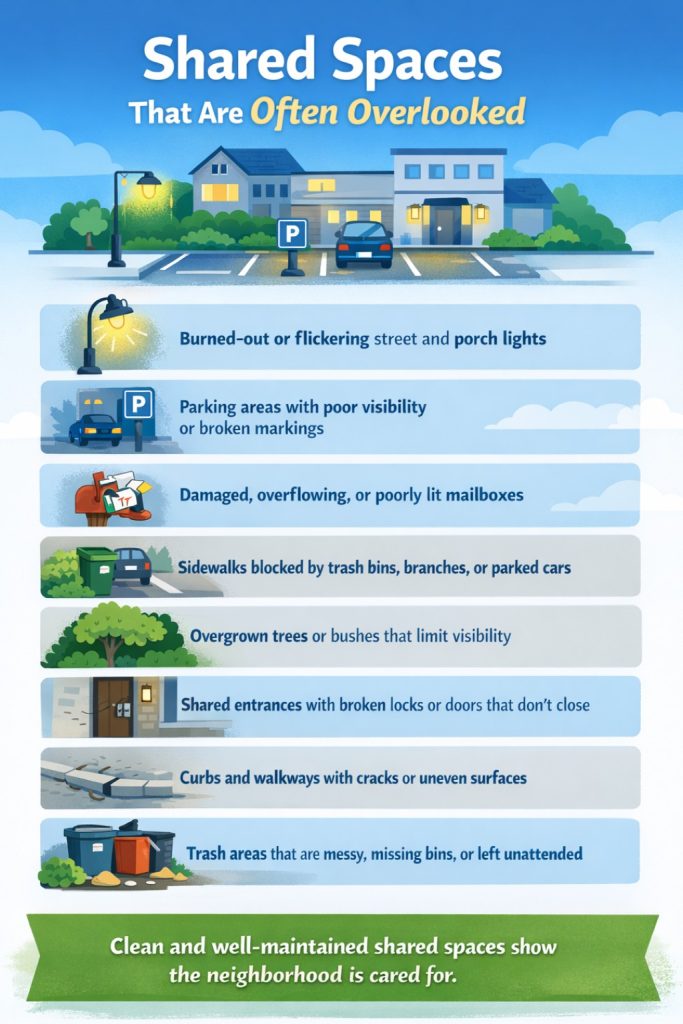
Parking areas, mailboxes, sidewalks, and shared entrances often get overlooked because no one feels responsible for them.
But all these areas set the tone for the entire neighborhood.
Broken lights, damaged curbs, overgrown trees, overflowing or missing trash bins, or blocked walkways signal neglect. Clean and visible shared spaces send the opposite message: people care about what happens here.
Make Your Neighborhood Look Lived In
Activity sends a message.
Lights on in the evening, trash bins brought back in, walkways cleared, or packages picked up promptly all help homes look occupied.
Helping a neighbor by collecting mail or keeping an eye on their place while they’re away benefits everyone on the street.
💡 Did you know?
Crime prevention data shows that homes appearing vacant are up to 60% more likely to be targeted than homes that look lived in – especially during holidays and travel seasons.
Awareness Without Overstepping
There’s an important balance when it comes to neighborhood safety…
Paying attention doesn’t mean assuming the worst, and helping out doesn’t mean crossing any boundaries. When there’s mutual respect, trust grows… and that trust makes it much easier to speak up when something truly feels off.

Final Thoughts
Neighborhood safety isn’t about doing everything perfectly. It’s about showing up in small ways, consistently.
When neighbors stay in touch and take a moment to notice what’s going on around them, safer streets tend to happen on their own. It doesn’t take big changes – just being present, showing a bit of care, and paying attention.
Safe neighborhoods aren’t built by systems alone… They’re built by people!
FAQ: Neighborhood Safety
What is neighborhood safety?
Neighborhood safety focuses on keeping shared spaces and homes secure through awareness, communication, and everyday preventive habits.
Does knowing your neighbors really help?
Of course it does! Neighborhoods where people recognize and communicate with each other tend to experience significantly fewer property crimes.
What’s one easy way to improve neighborhood safety?
Better lighting and staying aware of daily activity are among the simplest and most effective steps.
Can renters help improve neighborhood safety?
Absolutely! Renters play a main role by staying alert, communicating with neighbors, and caring for shared areas.
Is neighborhood safety only about crime prevention?
No way! It also includes pedestrian safety, awareness of children and pets, emergency readiness, and maintenance of shared spaces.
- 7. 1. 2026 12:35
- SHARE
